




Lab-Grown vs Natural Diamonds: Understanding Origin, Performance, and Choice


For generations, the meaning of a diamond felt settled. A diamond came from the earth, shaped by time and pressure far beyond human reach. It was valued for its rarity, its durability, and the quiet assurance that it would endure long after the moment it was given. Tradition shaped how diamonds were understood, purchased, and worn.
Today, that understanding has evolved.
Advances in diamond-growing technology have introduced a new chapter in the story of fine jewellery. It is now possible to create diamonds in laboratory environments that match natural diamonds in every defining characteristic. These diamonds share the same chemical composition, crystal structure, hardness, and optical performance as those formed deep within the earth over millions of years.
As buyers in Australia and New Zealand increasingly choose to buy diamond jewellery online, expectations have become more nuanced. Appearance remains important, but it is no longer the only consideration. Questions around origin, verification, value, and long-term relevance now sit alongside brilliance and carat weight in the decision-making process.
What has not changed is how diamonds behave once worn.
Lab-grown and natural diamonds reflect light in the same way. They resist wear to the same degree. They are graded using the same internationally recognised standards. Without advanced laboratory testing, even experienced jewellers cannot reliably tell them apart. For many buyers, this realisation introduces curiosity rather than clarity.
The distinction, it turns out, is not visual. It is contextual.
When two diamonds look identical, perform identically, and are assessed by the same gemological authorities, understanding the difference beneath the surface becomes essential. Not to decide which is superior, but to understand which aligns more closely with personal priorities, budget considerations, and the meaning attached to the jewellery being created.
This guide offers a considered and balanced exploration of lab-grown and natural diamonds. It looks at how each is formed, how authenticity is established, and how these factors influence real choices across rings, earrings, bracelets, and custom-designed jewellery. The intention is not to persuade, but to inform, so that each decision feels grounded and confident.
What Defines a Diamond?
A diamond is defined by its internal structure and chemical makeup, not by where it originates. Both natural and laboratory-grown diamonds are composed of pure carbon atoms arranged in a precise cubic crystal lattice. This arrangement is what gives diamonds their exceptional hardness and their ability to refract light with such intensity.
On the Mohs scale of mineral hardness, both lab-grown and natural diamonds score a 10, the highest possible rating. This makes them uniquely resistant to scratching and well-suited to jewellery intended for long-term wear.
From a gemological standpoint, a laboratory-grown diamond is like a real diamond. It should not be confused with simulants such as cubic zirconia or moissanite. While simulants may resemble diamonds visually, they differ in composition, durability, and optical behaviour.
The defining difference between lab-grown and natural diamonds lies solely in the process by which the carbon crystal is formed.

Formation and Origin
Natural Diamonds
Natural diamonds form deep beneath the earth’s surface, typically between 150 and 200 kilometres below ground. In this environment, carbon is exposed to immense pressure and extreme heat over periods that can span one to three billion years. Under these conditions, carbon atoms bond into the rigid crystal structure that defines a diamond.
Volcanic activity eventually carries these crystals closer to the surface through kimberlite pipes, making them accessible for mining. Each natural diamond carries a geological history shaped by time, movement, and interaction with surrounding minerals.
Because this process relies entirely on specific natural conditions, the supply of natural diamonds is finite. No two stones share the same formation journey, and inclusions within a diamond often reflect the environment in which it developed.
Laboratory-Grown Diamonds
Laboratory-grown diamonds are created in controlled environments designed to replicate the conditions under which natural diamonds form. The two primary methods used today are High Pressure High Temperature and Chemical Vapour Deposition.
High Pressure High Temperature recreates the intense heat and pressure found in the Earth’s mantle, allowing carbon to crystallise around a diamond seed. Chemical Vapour Deposition uses carbon-rich gas that breaks down and deposits carbon atoms layer by layer, gradually building a diamond crystal.
Both processes result in diamonds that are chemically, physically, and optically identical to natural stones. They are not coated or treated. They are grown rather than mined, but the material itself is the same.
Visual Appearance and Optical Performance
One of the most common questions buyers ask is whether lab-grown and natural solitaire diamonds look different when worn.
In practical terms, they do not.
To the unaided eye, lab-grown and natural diamonds are visually indistinguishable. Both display the same brilliance, fire, and scintillation when cut to comparable proportions. Light performance depends primarily on cut quality, symmetry, and polish, not on origin.
This means that a well-cut laboratory-grown diamond will perform just as beautifully as a well-cut natural diamond of the same specifications.
Can You Tell the Difference by Looking?
Even trained jewellers cannot reliably distinguish between lab-grown and natural diamonds without specialised equipment. Differences, when present, are detectable only through professional analysis and may include:
Internal growth patterns visible under high magnification
Trace inclusions associated with specific growth environments
Microscopic laser inscriptions applied to lab-grown diamonds for identification
Without certification or laboratory testing, visual identification is not possible.
Lab-Grown vs Natural Diamonds at a Glance

Certification and Transparency
Certification is essential regardless of a diamond’s origin. Independent gemological laboratories such as GIA and IGI assess both natural and lab-grown solitaire diamonds using the same grading criteria.
A grading report provides verified information on:
Carat weight
Cut quality
Colour grade
Clarity grade
Measurements and proportions
Clear disclosure of origin
Laboratory-grown solitaire diamonds are always identified as such on certification reports. Many also carry microscopic laser inscriptions on the girdle, visible only under magnification, to ensure transparency throughout the diamond’s lifetime.
For buyers purchasing diamond jewellery online, certification provides assurance that quality is measured consistently and that comparisons are based on fact rather than assumption.
Price and Value Considerations
Price is often a significant factor when buyers first explore lab-grown diamonds. Because these diamonds can be produced in controlled environments, they typically cost less per carat than natural diamonds of comparable quality.
Natural diamonds derive part of their value from geological rarity and long-standing market perception. Their pricing reflects limited supply, historical demand, and the sense of permanence associated with natural formation.
Laboratory-grown diamonds prioritise accessibility. They allow buyers to consider larger carat weights, higher clarity grades, or more distinctive shapes within a defined budget while maintaining the same visual and structural performance.
It is worth noting that the value of a diamond is influenced by many factors. Cut precision, proportions, symmetry, and certification often have a greater impact on appearance than origin alone.
Longevity and Care
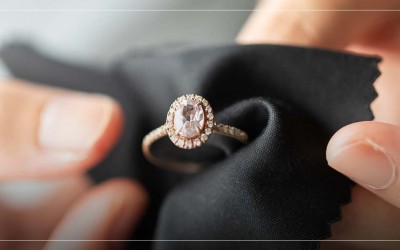
Both lab-grown and natural solitaire diamonds share the same hardness and resistance to scratching, making them ideal for everyday jewellery. With appropriate care, either type is designed to last for generations.
Because diamonds are exceptionally hard but not immune to impact, long-term care focuses more on the setting than on the stone itself. Prongs, bezels, and metal surfaces experience wear over time, particularly on rings worn daily.
Thoughtful care includes:
Removing diamond jewellery during activities involving impact or heavy physical work
Limiting exposure to harsh chemicals and cleaning agents that may affect metal finishes
Storing pieces separately to prevent contact between stones and metal surfaces
These practices help preserve both appearance and structural security, regardless of diamond origin.
Making an Informed Choice
Choosing between lab-grown and natural diamonds is not about determining which is better, but a personal choice. It is about understanding what aligns with individual priorities and expectations.
Some buyers are drawn to the idea of a diamond formed deep within the earth over billions of years. Others value the opportunity to select a larger or more distinctive stone while maintaining the same visual quality. These preferences are personal and often influenced by how the jewellery will be worn and what it represents.
Both diamond types are graded using the same standards. Certification ensures that quality is assessed consistently, allowing buyers to focus on design, proportion, and meaning rather than questioning authenticity.
Lab-grown diamonds as well as natural diamonds allow greater flexibility in size and shape. In both cases, craftsmanship plays a defining role in the final piece.
.jpg)
Creating Diamond Jewellery with Clarity and Intention
At RoseCut, the focus is on clarity, craftsmanship, and considered decision-making. As an online diamond house serving Australia and New Zealand, RoseCut works with both natural and laboratory-grown diamonds that meet strict certification standards.
We offer GIA certification for natural solitaire diamonds and IGI certification for lab-grown solitaire diamonds, providing full transparency across cut, colour, clarity, carat, and origin. This allows clients to compare options clearly and choose what best reflects their priorities.
Jewellery designs are intentionally understated, allowing the diamond to remain the focal point. Many pieces centre on refined solitaires and elegant fancy cuts, such as oval and marquise shapes, selected for balance, comfort, and everyday wearability.
All jewellery is crafted in 14K and 18K gold, combining durability with a refined finish. Because each piece is made to order, proportions and details are adjusted to suit the individual rather than relying on standardised settings.
Whether a client chooses a lab-grown solitaire diamond for flexibility or a natural solitaire diamond for its geological history, the approach remains the same. Clear information, careful sourcing, and thoughtful craftsmanship guide every piece.
Final Thoughts
Lab-grown and natural solitaire diamonds share the same beauty, durability, and performance. The difference lies not in how they look or wear, but in how they are formed and how buyers relate to their origins.
Understanding these distinctions allows the decision to feel intentional rather than uncertain. Some are drawn to rarity shaped by nature, while others value accessibility and design flexibility. Both choices are valid when supported by transparent certification and thoughtful design.
When buying diamond jewellery online, clarity matters more than comparison. With the right information, the focus returns to what a diamond represents and how it fits into the life of the person who wears it. That understanding transforms a purchase into a confident and meaningful choice.
Leave a Comment